01
01
Define the scope
Name the subject, purpose and destinations before any check. Keep correction separate from erasure.

Memory Signal / Inspect selective erasure
Follow an erasure request across indexes, caches and backup boundaries. Build a receipt that says what was checked—and what remains unknown.
The question it owns
Name the subject, purpose and destinations before any check. Keep correction separate from erasure.
What you inspect
01
Name the subject, purpose and destinations before any check. Keep correction separate from erasure.
02
Capture acknowledgement and the result of a read-after-delete check for each in-scope store.
03
An index and cache can clear while backup status stays unverified. A partial receipt preserves that distinction.
The edge case matters
A retrieval check covers the named active path. It does not prove physical erasure, backup expiry or future restore behavior.
Define the acceptance criteriaA retrieval check covers the named active path. It does not prove physical erasure, backup expiry or future restore behavior.
A readable workflow
Scope the request, review the destinations and preserve the unresolved branch.
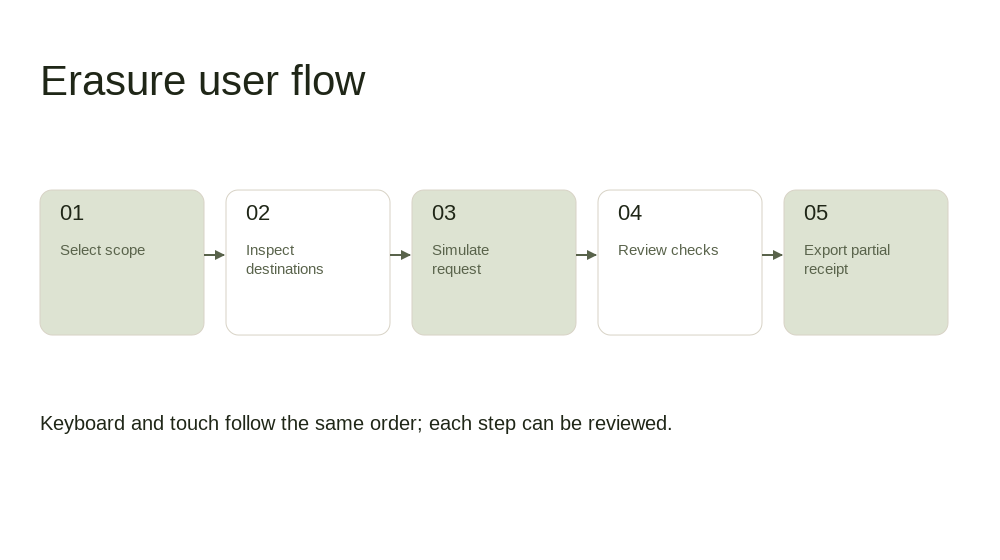
Part of the whole story
Source, scope, policy and evidence stay related across the Factmend product family. Explore the responsibility that follows.
Memory Report
The pilot should start with one question: Where did erasure reach? Agree on a fixture, the native behavior and a reviewable acceptance criterion before testing.
That is the intended starting point. Identify the native controls, destinations and API boundaries. Adapter and deployment behavior need to be confirmed for your environment.
The workspace provides local sample interactions for Memory Signal, using fictional records. Production connectivity and product access are still being developed.

A clearer next step
Bring your memory stack, your hardest question
and the boundaries you want to test.